


t
Ansich gut aber defekt nach 2 Jahren nomaler Nutzung
Ansich finde ich das Audio-Interface gut.
Sound-Qualität ist gut, AD-Wandler klingen "modern". Deswegen hatte ich das Interface vorallem auch wegen der Kompatibilität hauptsächlich genutzt in den letzten 2 Jahren. Aber ist nun wahrscheinlich defekt nach 2 Jahren nomaler Nutzung. Nun macht es allerdings Probleme und "Zzzzz" Sound. Eventuell lässt sich noch was tun, weil ich es gerne weitergenutzt hätte.
Sound-Qualität ist gut, AD-Wandler klingen "modern". Deswegen hatte ich das Interface vorallem auch wegen der Kompatibilität hauptsächlich genutzt in den letzten 2 Jahren. Aber ist nun wahrscheinlich defekt nach 2 Jahren nomaler Nutzung. Nun macht es allerdings Probleme und "Zzzzz" Sound. Eventuell lässt sich noch was tun, weil ich es gerne weitergenutzt hätte.
1
0
Bewertung melden
D
Too many driver issues
When I first used the Solo, I had bluescreens on Windows 10 because of driver/firmware issues. Putting a new firmware eventually fixed that. I then used the Solo and then replaced it with a 4i4, both 3rd generation, so all I mention will apply to both as they are extremely similar.
Latency was never really good, and after optimizing my computer and using a different interface (Universal Audio Volt) I must say - it must be the driver. Around the time Windows 10 neared the end of its life cycle, the drivers got worse, and with Windows 11 they became practically unusable. (Higher latency, clicks and pops, playback shorting out, weird fart/buffer playback issue noises. Like glitch in a box.)
Beyond the driver itself there is the Focusrite Control software. It does the job for configuring the interface and audio routing (if any), but it's... adequate. One probably reason why Focusrite interfaces are so cheap is that they do many things in software.
In general, the audio conversion, recording, and output were always decent. (As long as the driver played along.)
The hardware build is... something else! I once dropped a Focusrite and it smashed my phone screen from about 40 cm. The metal casing, in spite of having rounded edges, is no joke. Definitely robust. The Focusrite kept working without issue.
Power must be provided through USB, so you might need to disable power-saving features in your operating system to ensure it gets juice consistently.
The packaged music-making software is a decent bundle and over the years Focusrite/Novation kept adding various offers to it, ending in a nice little collection of plugins and simple versions of several DAWs which makes upgrading cheaper. Sadly they've started limiting you to a "one per customer" model lately, so even though I own for example a Novation Impulse keyboard, I get only one redemption code for added software anymore (it used to be one for each if I remember correctly).
I probably would have stuck with Focusrite if they hadn't messed up so badly when it comes to drivers. Now I have a Universal Audio Volt and I must say, I'm happier with that. But Focusrite did the job for five years and is much more affordable, of course.
Latency was never really good, and after optimizing my computer and using a different interface (Universal Audio Volt) I must say - it must be the driver. Around the time Windows 10 neared the end of its life cycle, the drivers got worse, and with Windows 11 they became practically unusable. (Higher latency, clicks and pops, playback shorting out, weird fart/buffer playback issue noises. Like glitch in a box.)
Beyond the driver itself there is the Focusrite Control software. It does the job for configuring the interface and audio routing (if any), but it's... adequate. One probably reason why Focusrite interfaces are so cheap is that they do many things in software.
In general, the audio conversion, recording, and output were always decent. (As long as the driver played along.)
The hardware build is... something else! I once dropped a Focusrite and it smashed my phone screen from about 40 cm. The metal casing, in spite of having rounded edges, is no joke. Definitely robust. The Focusrite kept working without issue.
Power must be provided through USB, so you might need to disable power-saving features in your operating system to ensure it gets juice consistently.
The packaged music-making software is a decent bundle and over the years Focusrite/Novation kept adding various offers to it, ending in a nice little collection of plugins and simple versions of several DAWs which makes upgrading cheaper. Sadly they've started limiting you to a "one per customer" model lately, so even though I own for example a Novation Impulse keyboard, I get only one redemption code for added software anymore (it used to be one for each if I remember correctly).
I probably would have stuck with Focusrite if they hadn't messed up so badly when it comes to drivers. Now I have a Universal Audio Volt and I must say, I'm happier with that. But Focusrite did the job for five years and is much more affordable, of course.
0
0
Bewertung melden
r
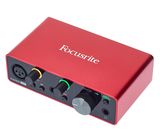
Focusrite Scarlett Solo 3rd Gen im Homestudio
Das Focusrite Scarlett Solo 3rd Gen ist ein sehr einfach zu bedienendes Interface.
Für Leute die mit Musik anfangen würde ich es auf jedenfall empfehlen, aber der Sound hat mich nicht so überzeugt.
Für den Preis jedoch ein klasse Interface.
Für Leute die mit Musik anfangen würde ich es auf jedenfall empfehlen, aber der Sound hat mich nicht so überzeugt.
Für den Preis jedoch ein klasse Interface.
0
0
Bewertung melden
CI
Nur je ein Kanal, trotz zweier Eingänge
Man merkt es halt zu spät: es gibt nur einen Mikrofoneingang und einen Instrument Eingang, das wurde mir zu spät bewusst. Ansonsten ein gutes Gerät für den Preis. Die mitgelieferten Plugins von Focusrite sind sehr gut, Auch das e-Piano ein vollwertiges Instrument.
0
0
Bewertung melden
HT
Leider kein Dauerläufer
Das Gerät macht einen wertigen Eindruck, war sauber verarbeitet und der Thomann Versand war wie immer perfekt.
Leider ist der DAC für den Kopfhörerausgang extrem schwachbrüstig und der Gain fürs Mikrofon kommt bei größeren Mikros schnell an seine Grenzen.
Mein Hauptkritikpunkt ist jedoch, dass das Gerät nach drei Jahren Hobbybetrieb über den Jordan gegangen ist. Es hat nicht nur nicht mehr funktioniert sondern bei meinem Rechner zu Bluescreens geführt.
Sowas ist bei Geräten, an den sehr teure Hardware angeschlossen wird ein absoluten No-Go
Leider ist der DAC für den Kopfhörerausgang extrem schwachbrüstig und der Gain fürs Mikrofon kommt bei größeren Mikros schnell an seine Grenzen.
Mein Hauptkritikpunkt ist jedoch, dass das Gerät nach drei Jahren Hobbybetrieb über den Jordan gegangen ist. Es hat nicht nur nicht mehr funktioniert sondern bei meinem Rechner zu Bluescreens geführt.
Sowas ist bei Geräten, an den sehr teure Hardware angeschlossen wird ein absoluten No-Go
0
0
Bewertung melden
b
Ein bisschen enttäuscht
Da ich eigentlich nur gute Revies und Bewertungen über die Focusrite Scarlett Reihe finden konnte habe ich mich, um meine Yamaha HS8 zu betreiben, für dieses Interface entschieden.
Musste leider feststellen (und wie sich nach ein bisschen Recherche raustellte, bin ich hier nicht der einzige), dass das Interface Störsignale aus dem PC (um genau zu sein von der GPU) über die TRS-Ausgänge verstärkt. Das Problem konnte zwar über ein USB-Hub/Dongle mit einer externen Spannungsversorgung behoben werden aber ich hatte mir erhofft, dass der Hersteller sich hier schon im Vornherein Gedanken über sowas macht.
Abgesehen von den Störgeräuschen vom USB-Anschluss und der Tatsache, dass man sich vor dem Download der Treiber registrieren muss, macht das Interface aber einen soliden Eindruck.
Musste leider feststellen (und wie sich nach ein bisschen Recherche raustellte, bin ich hier nicht der einzige), dass das Interface Störsignale aus dem PC (um genau zu sein von der GPU) über die TRS-Ausgänge verstärkt. Das Problem konnte zwar über ein USB-Hub/Dongle mit einer externen Spannungsversorgung behoben werden aber ich hatte mir erhofft, dass der Hersteller sich hier schon im Vornherein Gedanken über sowas macht.
Abgesehen von den Störgeräuschen vom USB-Anschluss und der Tatsache, dass man sich vor dem Download der Treiber registrieren muss, macht das Interface aber einen soliden Eindruck.
10
0
Bewertung melden
E
In Windows hatte ich immer wieder massive Audioprobleme.
0
1
Bewertung melden
KL
Echt niedriger Pegel..
Also ich bin schon ein bisserl enttäuscht, ich muss mit meinem großmembran kondensatormicro am focusrite das gain auf anschlag drehen damit ich einen halbwegs akzeptablen pegel bekomme.. die verarbeitung ist aber super.
1
1
Bewertung melden
Z
Tut was es soll - aber auch nicht mehr
Anfangs war ich sehr zufrieden, was sich jedoch etwas gelegt hat: Focusrite bietet hier keine Vollversion des Programms Focusrite Control, sodass sich das direct-Monitoring nicht abmischen lässt... also kann man nur beide Kanäle in vergebener Lautstärke gemeinsam ändern. Eine Software-Lösung kommt aufgrund von Latenzen nicht in Frage - also werde ich wohl damit leben müssen.
0
1
Bewertung melden
M
Absolut ausreichend für semi-professionelle Studios
Wirklich rundum ein super Audio-Interface! Für Windows musste ich die Software noch installieren damit es lief, beim Mac ist es Plug and Play. Mir gefällt die Verarbeitung sowie die Optik, und Audioqualität ist ähnlich wie bei anderen Interfaces in der Preisklasse gut.
Edit: Wenn man allerdings Studiomonitore anschließen will, ist das kompletter Murks. Es gibt keinen separaten Regler für Kopfhörer, warum auch immer, d.h. das Lautsprecher auch immer an sind, wenn man die Kopfhörer benutzt. Wenn ihr also Studiomonitore anschließen wollt: unbrauchbar, nehmt lieber das 2i2.
Edit: Wenn man allerdings Studiomonitore anschließen will, ist das kompletter Murks. Es gibt keinen separaten Regler für Kopfhörer, warum auch immer, d.h. das Lautsprecher auch immer an sind, wenn man die Kopfhörer benutzt. Wenn ihr also Studiomonitore anschließen wollt: unbrauchbar, nehmt lieber das 2i2.
0
0
Bewertung melden