



Zum Seiteninhalt

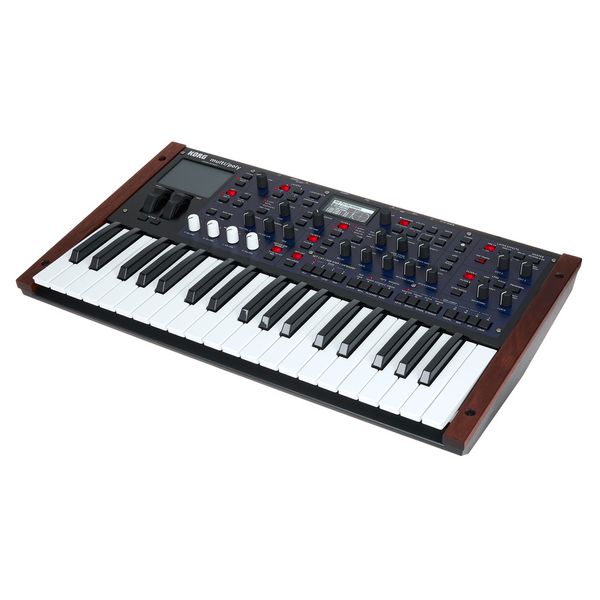
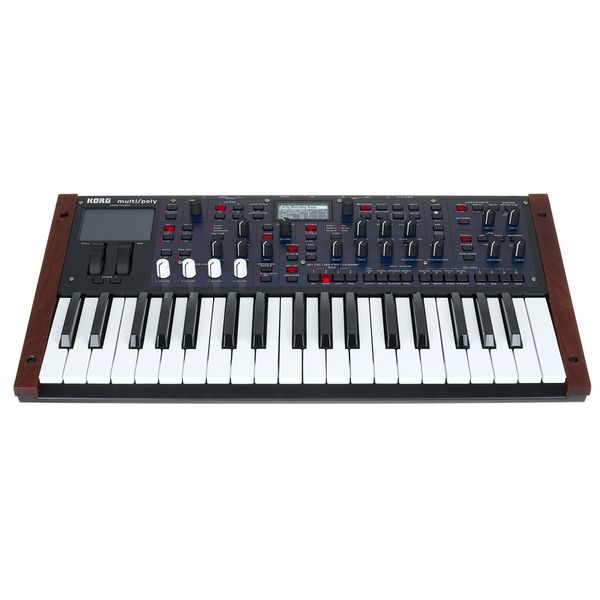
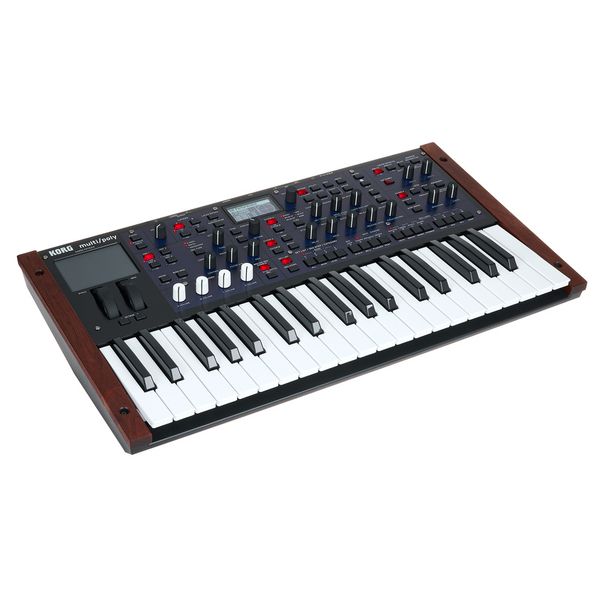
Analog Modeling Synthesizer

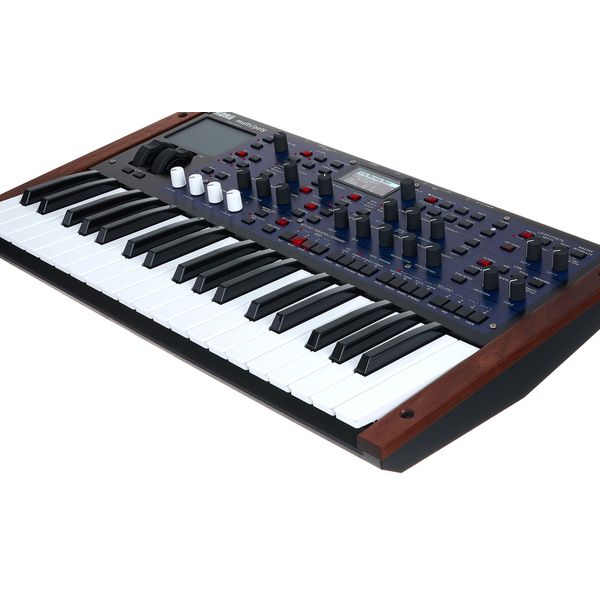
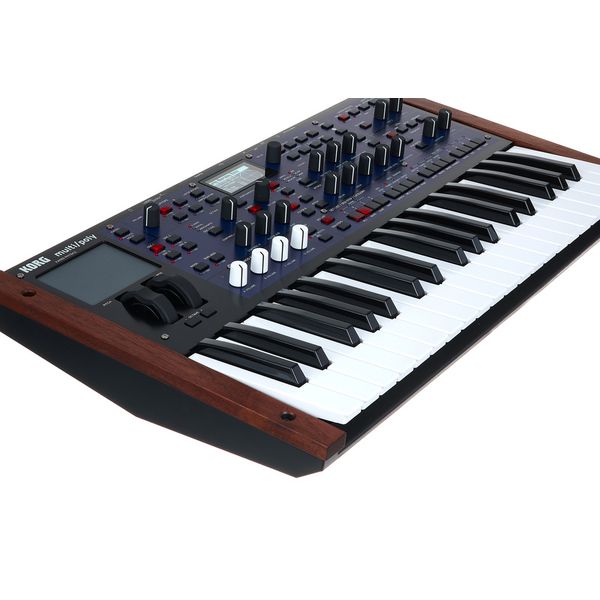
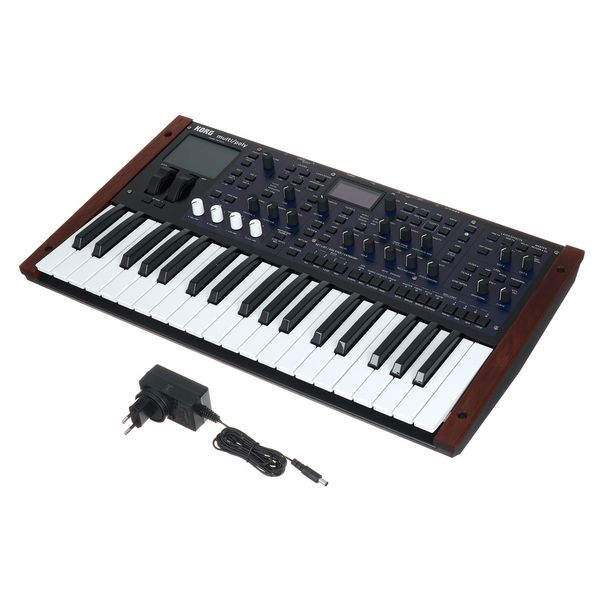
  • 37 halbgewichtete, anschlags- und release-dynamische Tasten
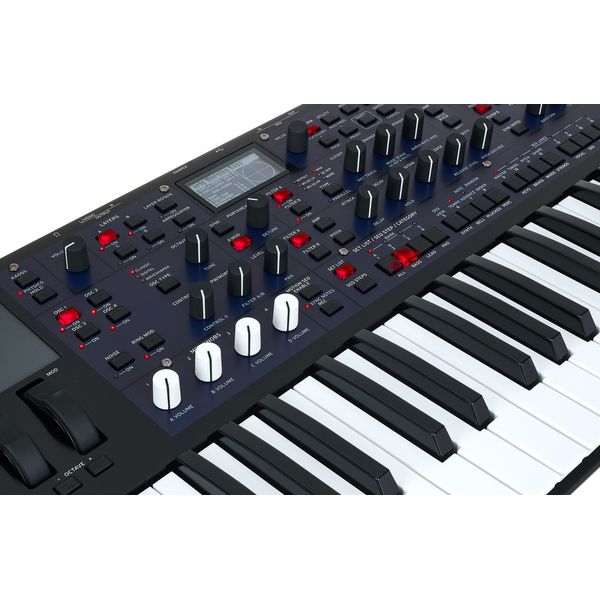
  • 4 Oszillatoren - wahlweise „Classic“ virtuell analoge Wellenformen, „Digital“ Wavetables oder „Waveshaper“
  • flexible Routing-Optionen für Oszillator Sync, Ring- und Cross-Modulation
  • Dual Filter mit klassischen Filtermodellen wie Mono / Poly, MS-20, Mini oder Pro
  • 4 DAHDSR-Hüllkurven
  • 5 LFOs
  • 6 Modulationsprozessoren
  • bis zu 4 komplette Soundprogramme innerhalb einer Performance für Layer-, Split- und Layer-Rotate-Sounds
  • 3 Effektblöcke mit Multi-Effekten
  • Master-Reverb
  • Master-EQ
  • max. Polyphonie: 60 Stimmen
  • virtuelle Voice Cards sowie unterschiedliche Hüllkurven- und Portamento-Modelle
  • Motion Sequencing 2.0
  • Kaoss Physics mit dediziertem X/Y Touchpad
  • 4 programmierbare „MOD“-Regler für Parameteränderungen
  • Pitch- und Modulationsrad
  • Arpeggiator
  • Import-Möglichkeit für eigene Wavetables in Standardformaten
  • Editor-/Librarian-Software für Mac und PC
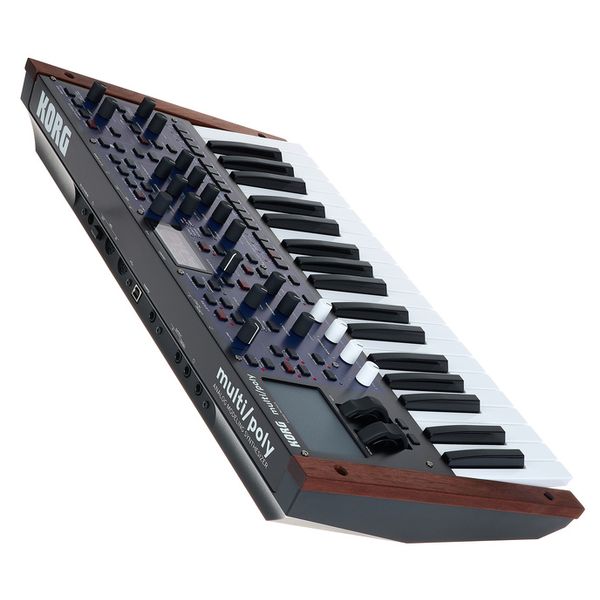
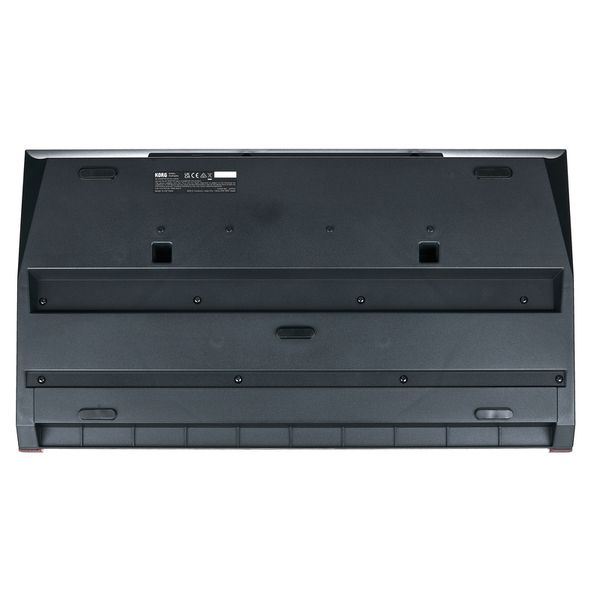
  • Line Ausgänge: 2 x 6,3 mm Klinke
  • Stereo Kopfhörerausgang: 6,3 mm Klinke
  • Dämpferpedal Eingang: 6,3 mm Klinke
  • MIDI Ein- und Ausgang
  • USB-B
  • Abmessungen (B x H x T): 566 x 93 x 319 mm
  • Gewicht: 3,5 kg
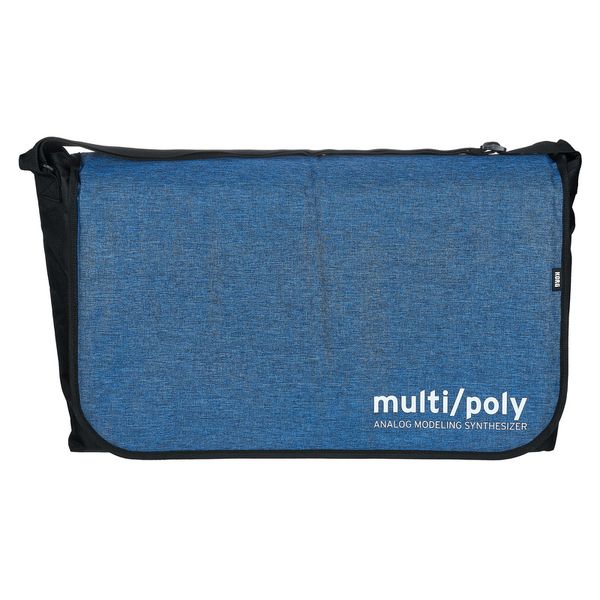
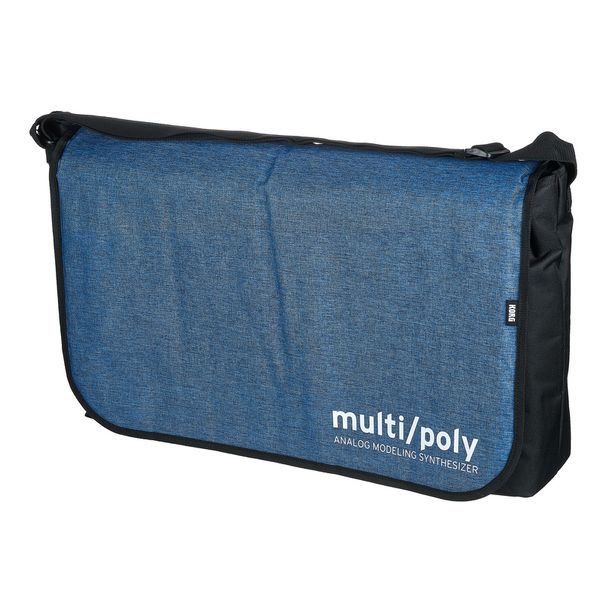
  • inkl. externes Netzteil (KA390VI) sowie Softcase
  • Erhältlich seit Dezember 2024
  • Artikelnummer 602948
  • Verkaufseinheit 1 Stück
  • Anzahl der Tasten 37
  • Anschlagdynamik Ja
  • Aftertouch Nein
  • Keyboard Split Nein
  • Modulation Wheel Ja
  • Anzahl der Stimmen 60
  • Tonerzeugung Modeling
  • MIDI Schnittstelle 1x in, 1x Out
  • Speichermedium Keine
  • USB Anschluss Ja
  • Effekte 1x Multieffektprozessor
  • Arpeggiator Ja
  • Anzahl der analogen Ausgänge 2
  • Digitalausgang Nein
  • Display Ja
  • Pedal Anschlüsse 1
  • Maße 566 x 93 x 319 mm
  • Gewicht 3,5 kg
777 CHF
Alle Preise inkl. MwSt.
Sofort lieferbar
1

8 Kundenbewertungen

4.8 / 5

Bedienung

Features

Sound

Verarbeitung

6 Rezensionen

P
Multitastisch
Pfeili 23.11.2025
Der Multi/Poly ist für sein Preisleistungsverhältnis ein wahrer Könner. Er bietet eine ausgezeichnete Auswahl an Sounds und dazu viele features ,wie zB. 4 Oszillatoren in digitaler Wellenform, Crossmodulation ,12 Filtertypen, 4 Hüllkurven, 5LFOs, Viele Modulationsmöglichkeiten, Effectmöglichkeiten wie Reverb, Delay Chorus, Phaser .....Einen Apreggiator und ein KAOSS Pett und vieles mehr . Ein Synth für Experimentierfreudige und Soundtüftler. Alles was man so braucht für schönen und ausgefallenem Sound.
Doch das was fehlt sind mindestens Aftertouch-Tasten und eventuel ein 49 er Tasten -Gerät . Vieleicht kommt auch hier eine erweiterte Version Raus wie bei den Opsix, Wavestate und Modwave.
Bedienung
Features
Sound
Verarbeitung
2
0
Bewertung melden

Bewertung melden

S
BUDGET VIELESKÖNNER
Siebenmalsiebzig 20.03.2026
Auf der Suche nach einem Synth der Vieles kann , kam ich letztendlich zum Multi/Poly.

Im Gegensatz zu diversen anderen Herstellern die sich ihren Namen total übertrieben bezahlen lassen, bekommt man beim Multi Poly einen Virtuell-Analogen (= digitalen) Synthesizer der dank von ausgetüftelter, verbesserter Technik die subtilen Variationen zwischen einzelnen Hardware-Stimmen (Voice Cards), was für einen lebendigen, „analogen“ Klang sorgt.
Im Prinzip läuft jedoch in einem Gehäuse ein Betriebsystem auf dessen Basis alles funktioniert.
Den Korg multi/poly gibt es auch als Native Version - als Plugin für den PC für 200$. Da muss man wissen was man möchte. Nach meiner Auffassung wird für das Geld eine gute Hands/on-Erfahrung geboten mit grandiosen Möglichkeiten. Als Käufer eines Hardware Multi/Poly bekommt man von Korg die native Plugin Version für 50$. Und eine Tasche ist auch im Lieferumfang enthalten.

Die 4 Layer einer Performance (= Patch) können jeweils mit 4 Oszilatoren aufwarten & können Standards wie Sinus-, Sägezahn-, Square-Waves usw.. jedoch auch Wavetable. Dadurch erreicht man eine unglaublich breite Soundpalette. Lediglich natürliche Streicher wie einen originalgetreuen Geigenklang usw. .. können nicht dargestellt werden. Ist aber auch logisch auf Grund der vorhandenen Technik.

Korg's Politik gefällt mir gut, denn die ist ehrlich bzgl. des Preis/Leistungsverhältniss & die besagten Namhaften anderen Hersteller versuchen mit Vielen ihrer Produkte , die auch keine komplexen vollständigen analogen Schaltungen aufweisen , die Kunden auszunehmen wie eine Weihnachtsgans - und lassen sich im Prinzip ein "PlugIn" in einem Gehäuse mit OS übertrieben teuer bezahlen.

Für's Geld bekommt man hier von Korg im Prinzip alles geboten was man möchte.
Sequenzer mit tollen, vielseitigen Möglichkeiten , Arpegiator mit Hold Funktion , Effekte die tatsächlich brauchbar sind, um nur die wichtigsten Aspekte zu nennen.

Das einzigste Manko ist das Fehlen von Poly-Aftertouch - und wenn man auf dieses Feature, was es gibt, zugreifen möchte ist man gezwungen eine entsprechende Tastatur anzuschließen.

Ich denke das der Korg toll klingt, gute Features hat & das er , wenn man kein absoluter Synth-Anfänger ist , eine ausgezeichnete Budget-Wahl der Vielseitigkeit ist.

Zum Schluss möchte ich noch erwähnen, das die Librarian Software zur Verbindung mit einem PC sehr gut ist. Sie kann auch sehr hilfreich sein , um das Sounddesign hinter den Patches nachvollziehen zu können.
Bedienung
Features
Sound
Verarbeitung
1
0
Bewertung melden

Bewertung melden

d
Multitalent mit Kultpotenzial
dtaberlin 15.01.2026
Bester Synthesizer von Korg. Kann fast alles. Mehr brauche ich nicht. Ein würdiger Erbe des MonoPoly!
Bedienung
Features
Sound
Verarbeitung
2
0
Bewertung melden

Bewertung melden

google translate gb
Leider ist ein Fehler aufgetreten. Bitte wiederholen Sie diese Aktion später.
M
Sounds like an Access Virus with Stranger Things vibes, which is good.
MightyJoe 10.07.2025
This synth has that early 2000s virtual analog sound like the MC909 or the Access Virus and has the presets to match.

The build is ok but could be better, honestly: the knobs are great and super smooth, the face plate is metal, but the actual synth chassis is plastic and the keyboard is okayish but lacks aftertouch.
Nothing wrong, but nothing premium either.
It's quite light for its size, which is good, and the included bag is of good quality and fits the synth perfectly (kudos to Korg for the included bag!).

The synth excels in evolving sounds and whole rhythmic patterns, thanks to its internal polyrhythmic multitrack sequencer per patch, something others synths don't have and it really shows.

It has a lot of very versatile sounds and evolving synths, but what it seems to excel in is in trance and synthy soundtrack music.
It can be used to emulate 80s synths and has some cool sounding Juno pads and DX7-like bell sounds, so you can easily make an 80s-like soundtrack with this synth alone.

It doesn't really sound the same as a true analog synth though.
I don't know what it is, but the actual quality of the sound lacks something. As if it was sampled at a lower rate or something (which is not the case because that's not how virtual analog synths work, but still).
Maybe it's because of the internal effects: they are very cool but sound a little "grainy" to my ear.
The synth still sounds great though and if I had to keep a single synth, maybe this would be the one just because of how versatile it is.
And the perceived difference with a true analog sound just gives it some character.

The hands-on control is quite convoluted: it has a lot of quirks, but I've seen much worse.
Making your own sounds can be VERY involved, so be warned.
The hardware controls seem to be there to modify the presets, not to make a patch from scratch. I mean, it can be done, but you're much better off using the PC/Mac editor for that, because there's LOTS of menu diving otherwise.

Compared to the Roland Jupiter X/Xm, I like this one better:
The presets are much more inspiring to me and it's actually easier to use, so if I had to choose, even though I'm a fan of Juno sounds and the Jupiter X/Xm has a slightly better sound quality, I would still choose the Korg Multi/Poly, because the Jupiter wants to be so many synths at once that it loses its character in the process. (and the i-arpeggio ends up being kinda gimmicky in the end.)

This synth has that late 90's early 2000's trance energy with some added "Stranger Things" vibe, with Juno pads and DX7 bells.
It's clearly a winner!

Now, this synth also exists in software form.
Is it really worth it getting it in hardware?
If you want hands-on controls for live sound manipulation of presets, then yes, it is worth it: it has plenty of knobs to make the sound evolve live and the kaos pad is very cool to use.
If what you want is to craft your own presets from zero with a knob per function, then no: making your own presets is so involved that you will need the software editor anyways, since the screen on the synth is too minimal for in-depth editing. It can be done, but it's not fun at all.

The software version has the advantage of being able to use as many instances as you like and saving all your edits per track and per project without all the hassle of having to record external hardware.
So its much more convenient if you only want to compose music and not perform it live.
But keep in mind that software licenses are just that: a TEMPORAL license of use that could be revoked at any time for any reason (and that will stop working eventually because of software obsolescence and operating system upgrades).
Hardware on the other hand, you actually OWN IT.
Bedienung
Features
Sound
Verarbeitung
26
0
Bewertung melden

Bewertung melden